- Main
- News
- Al-Farabi KazNU Experts Conduct Practical Mudflow Safety Training for School Students in Almaty Region
Al-Farabi KazNU Experts Conduct Practical Mudflow Safety Training for School Students in Almaty Region
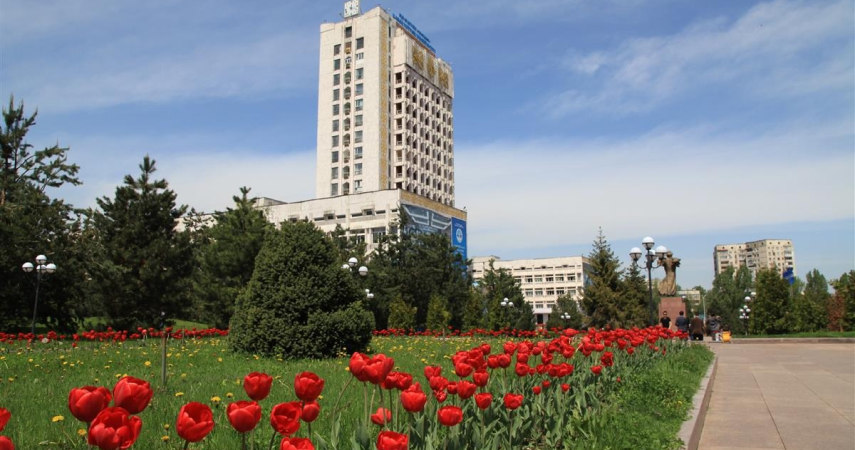
On 7 September 2026, as part of the “SDGs Beyond Campus” initiative, experts from Al-Farabi Kazakh National University, together with partner organizations, conducted information and practical training sessions on mudflow safety for students at two schools in the Almaty Region - School-Gymnasium No. 25 in Talgar and Raiymbek Batyr Secondary School in Esik.
The activities were organized within the framework of the UNESCO project “Reducing Vulnerabilities of Populations in the Central Asian Region from Glacier Lake Outburst Floods in a Changing Climate” (GLOFCA), implemented by the UNESCO Regional Office in Almaty with financial support from the Adaptation Fund. The main objective was to raise awareness and strengthen the practical preparedness of students and school staff to respond to the risks of mudflows and glacial lake outburst floods.
The activities brought together representatives of the UNESCO Regional Office in Almaty, the Kazselezashchita State Institution of the Ministry of Emergency Situations of the Republic of Kazakhstan, experts from Al-Farabi KazNU, representatives of local authorities and education bodies, as well as school administrations and teaching staff.
Zhanar Raimbekova, project expert and Senior Lecturer at the Department of Meteorology and Hydrology, Faculty of Geography and Environmental Sciences, Al-Farabi KazNU, conducted information sessions on mudflow hazards for school students. The students learned about the causes of mudflows, the risks associated with moraine-dammed lake outbursts, and natural hazards specific to the Talgar and Esik river basins. Using local examples, the sessions demonstrated the monitoring and early warning chain - from observing a potential hazard source to transmitting warnings to relevant authorities and local communities.
A key feature of the initiative was the combination of science-based education with practical preparedness training. Following the information sessions, representatives of Kazselezashchita introduced students to the principles of early warning systems and explained the actions to be taken upon receiving a hazard warning. Practical evacuation drills were then conducted at both schools, with students and staff moving in an organized manner to pre-designated safe assembly points.
At the assembly points, students completed practical exercises such as “You hear the warning - what do you do?”, “Identify the hazardous zone”, and “Pass on the warning.” They practiced identifying safe directions of movement and communicating warning information. Following the evacuation, roll calls were conducted, while specialists demonstrated elements of the early warning system and explained how monitoring data are transmitted from observation stations.
Conducting such activities directly in schools is a practical example of the “SDGs Beyond Campus” approach, through which the University’s scientific knowledge and expertise are extended beyond the academic environment to strengthen awareness and resilience within local communities. Interaction among scientists, natural hazard specialists, teachers, and students helps translate scientific knowledge about climate-related and natural hazards into practical safety skills.
The initiative contributes to SDG 4: Quality Education, SDG 11: Sustainable Cities and Communities, and SDG 13: Climate Action. Cooperation between the University, UNESCO, government services, and educational institutions also supports SDG 17: Partnerships for the Goals.
Such initiatives strengthen the University’s engagement with society and contribute to building a culture of preparedness for natural hazards, particularly among younger generations living in areas potentially exposed to mudflow risks.
Other news