OECD Representatives Discuss Business Integrity and Transparency at Farabi University
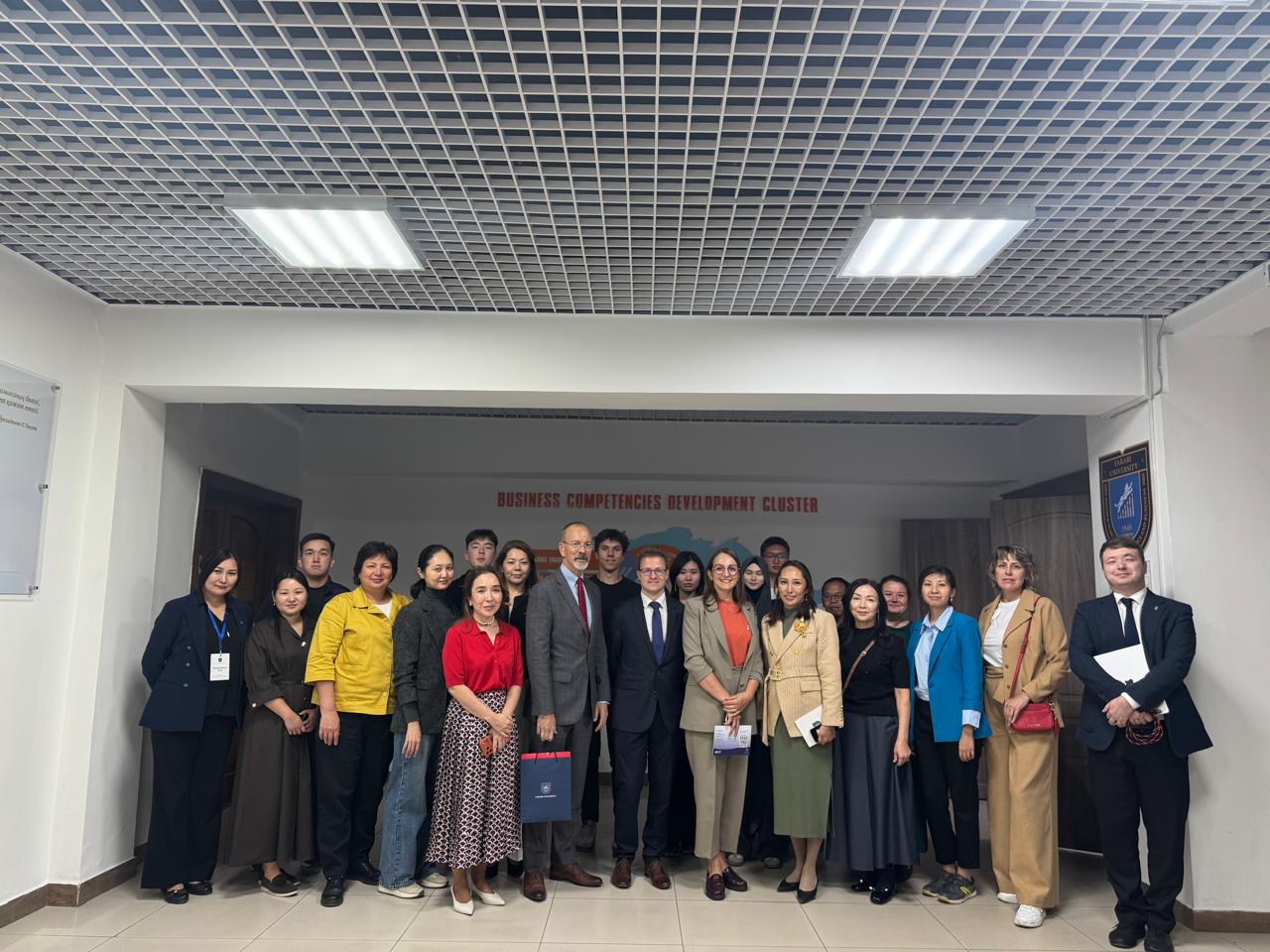
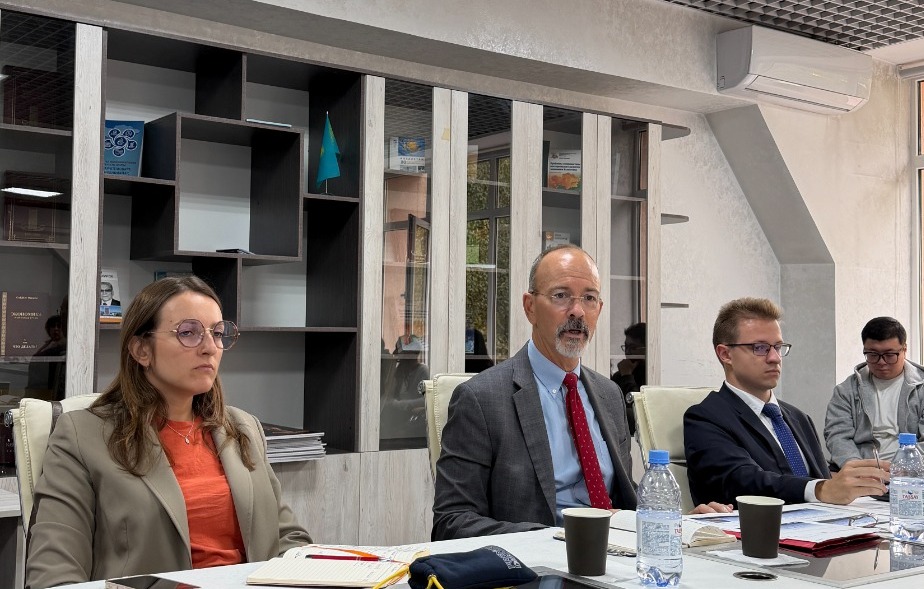
On September 30, 2026, the Higher School of Economics and Business at Al-Farabi Kazakh National University hosted a meeting with representatives of the Organisation for Economic Co-operation and Development (OECD), focusing on business integrity, transparency, and anti-corruption in the private sector.
The meeting was attended by Zhanna Yermekova, Dean of the Higher School of Economics and Business, Shynggys Nurgazy, Deputy Dean for Research, Innovation and International Relations, as well as members of the School’s academic staff.
The OECD delegation included William Tompson, Head of the OECD Eurasia Division; Céleste Laporte-Talamon, Policy Analyst for Central Asia; and Egor Polishchuk, Junior Policy Analyst for Central Asia.
A central focus of the meeting was the OECD project “Fair Market Conditions for Competitiveness in Kazakhstan,” which aims to promote integrity and anti-corruption practices in Kazakhstan. One of the project’s key objectives is to support the integration of anti-corruption and integrity topics into university curricula and to provide training for academic staff and students in order to foster ethical leadership and responsible business practices.
The OECD experts highlighted the important role of universities in this process. Higher education institutions prepare future public officials, business leaders, and professionals whose decisions can directly influence the quality of institutions and the business environment. Education on integrity can equip students with the knowledge, skills, and behaviours needed to recognise, resist, and report corrupt practices and to make responsible decisions in their future professional careers.
During the session, the experts discussed the concept of integrity, describing it as a positive commitment to transparency, accountability, and honest dealing. The presentation also addressed practices that undermine integrity, including bribery, conflicts of interest, bid rigging, and facilitation payments. Particular attention was given to the impact of corruption on competition, investment, international trade, and long-term economic growth.
The participants also discussed the structural characteristics of Kazakhstan’s economy, public-private interaction, procurement, and the importance of creating fair market conditions. The OECD experts presented findings and recommendations concerning whistleblower protection, transparency of beneficial ownership, public-private interaction rules, and integrity in public procurement.
The OECD instruments and practical approaches presented during the meeting were of particular interest to the academic staff. These included the OECD Guidelines for Multinational Enterprises on Responsible Business Conduct, the OECD Anti-Bribery Convention, the OECD Due Diligence Guidance for Responsible Business Conduct, the OECD Recommendation on Public Integrity, and the OECD Guidelines on Corporate Governance of State-Owned Enterprises.
During the discussion, the participants exchanged views on integrating business ethics, transparency, and integrity into the educational process, using OECD materials and international case studies in teaching, and exploring opportunities for further cooperation between Al-Farabi KazNU and the OECD.
The meeting provided an important platform for professional dialogue between international experts and the academic community of Al-Farabi KazNU and opened new opportunities for further cooperation in education, research, and the promotion of international standards of responsible business conduct.
Other news