- Main
- AL-FARABI NEWS LETTERS
- KazNU Scientists Study the Effects of Microplastics on the Genetic Stability of Living Organisms
KazNU Scientists Study the Effects of Microplastics on the Genetic Stability of Living Organisms
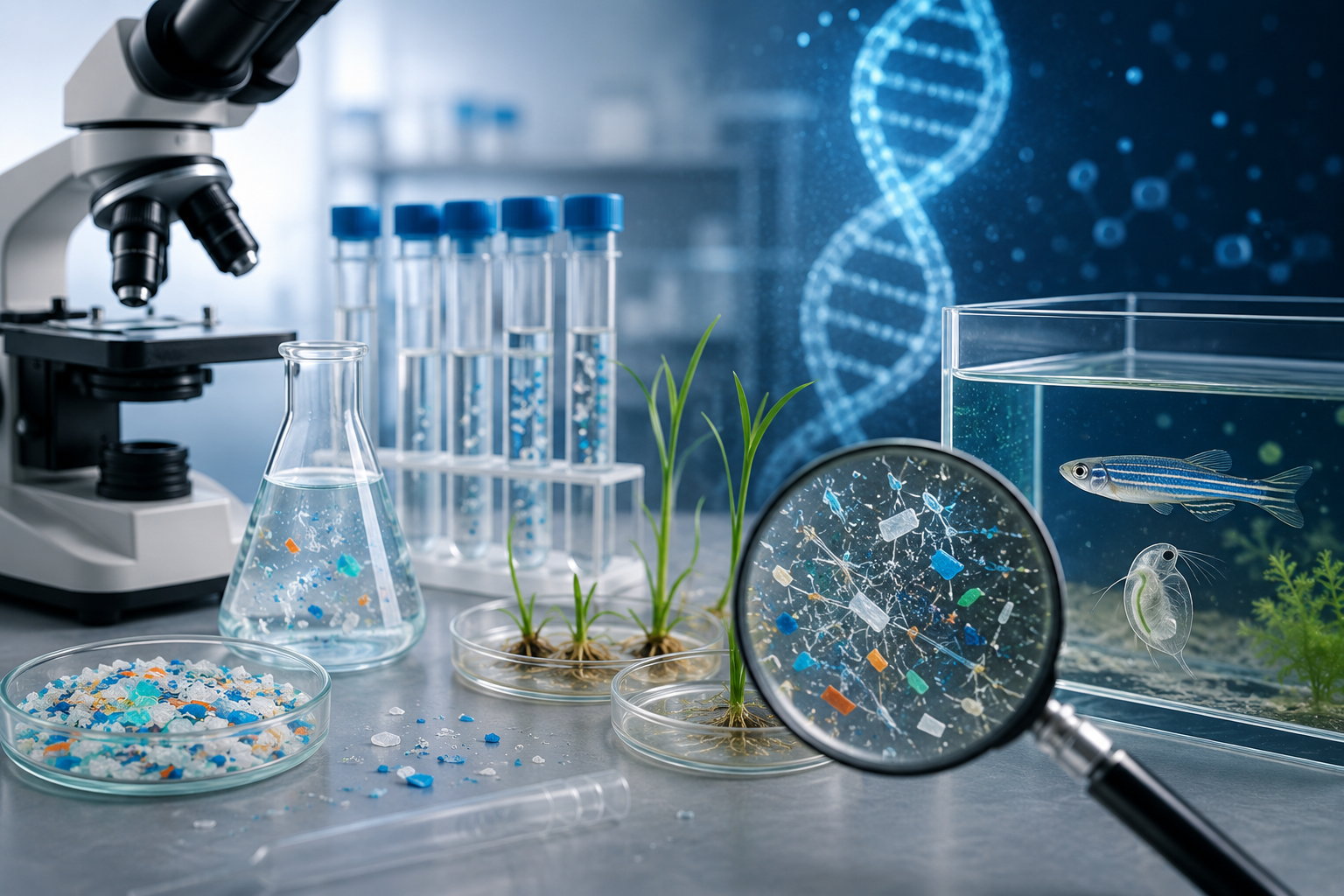
Scientists at Al-Farabi Kazakh National University are conducting a comprehensive study of the genotoxic, mutagenic and toxic effects of microplastics on living organisms. The project focuses on assessing the potential hazards posed to the environment, biota and humans by microplastics derived from widely used types of plastic, including polyethylene terephthalate, polypropylene and polystyrene.
In recent years, microplastic pollution has become one of the most pressing environmental challenges of the modern world. Tiny plastic particles can spread through water, soil and the atmosphere, enter different ecosystems and interact with living organisms. However, their long-term effects on genetic stability and biological processes remain insufficiently understood.
The main objective of the project is to investigate the genotoxic and mutagenic activity of microplastics produced from widely used plastics, assess their potential hazards to environmental objects and evaluate possible genetic risks to humans based on experimental data.
As part of the study, researchers will investigate the mutagenic, genotoxic and toxic activity of microplastics derived from polyethylene terephthalate, polypropylene and polystyrene. Particular attention will be given to factors that may influence their genetic activity, including particle size, chemical composition and duration of exposure.
One of the key areas of the project is the comprehensive investigation of microplastic effects on different groups of living organisms. For this purpose, scientists will use a multitrophic system of test objects involving microorganisms, plants and animals.
The research will involve microorganisms such as Salmonella typhimurium and Escherichia coli, plant species including Allium cepa and Hordeum vulgare, as well as animal test organisms such as Daphnia magna, Danio rerio and Mus musculus.
The Ames test will be used to assess the mutagenic activity of microplastics. This method will enable researchers to conduct an initial screening of the studied particles and determine their potential to induce genetic changes.
In addition, scientists will use lux biosensor systems to investigate the genotoxic, oxidative and toxic activity of microplastics. These methods make it possible to detect processes associated with DNA damage, oxidative stress and other changes occurring in living cells.
Special attention will be given to studying the effects of microplastics on aquatic organisms. Using Daphnia magna as a test organism, researchers will assess survival, reproduction, locomotor activity and behavioural responses under exposure to different concentrations of microplastics.
Another important research object will be embryos of Danio rerio. Experimental studies will help assess the potential effects of microplastics on embryonic development, organism survival and possible developmental abnormalities.
Cytogenetic methods will also be used to investigate the genetic stability of plant and animal cells. Researchers plan to analyse chromosomal alterations and other genetic changes caused by different types and concentrations of microplastics.
One of the advanced methods to be applied in the project is the DNA comet assay. This sensitive technique makes it possible to detect damage to genetic material at the level of individual cells and is an important tool for assessing the genotoxic effects of environmental factors.
The project will also investigate the effects of microplastics on the internal organs and tissues of laboratory animals. The results will be analysed using histological, cytochemical, biochemical and molecular genetic methods.
A separate area of research focuses on oxidative stress induced by microplastics. Scientists will examine the activity of antioxidant enzymes and indicators of oxidative processes in plant and animal tissues.
In addition, the project предусматривает the study of genes associated with DNA repair, oxidative stress and inflammatory responses. This will provide a deeper understanding of the biological mechanisms through which microplastics may affect living organisms.
An important component of the project is the study of the physicochemical properties of microplastics. Particle size and shape will be determined using microscopic methods, while chemical composition will be analysed through gas chromatography and mass spectrometry.
One of the practical directions of the research involves assessing the biological effects of microplastics present in surface waters of the Almaty agglomeration. Using microbiological, plant and animal test systems, scientists plan to investigate the potential toxicity of water bodies containing microplastic particles.
At the final stage of the project, the obtained results will undergo comprehensive mathematical analysis. Based on a combination of biological and genetic indicators, researchers plan to determine safe exposure levels for different types of microplastics using specialised software.
The scientists also aim to assess an integrated indicator of the genetic risk posed by microplastics to biota and humans. This will contribute to the development of more accurate scientific approaches for evaluating the environmental hazards associated with microplastic pollution.
The scientific novelty of the project lies in its comprehensive investigation of the genotoxicity and mutagenicity of microplastics simultaneously in microbiological, plant and animal test systems. Such an approach makes it possible to compare the effects of microplastics across different biological and trophic levels and obtain a more comprehensive understanding of their potential hazards.
Another important feature of the research is the identification of factors influencing the genetic activity of microplastics. These include particle size, chemical composition and duration of exposure to living organisms.
The practical significance of the project is related to the potential use of its findings in developing environmental and genetic monitoring systems. The scientific data obtained may contribute to the development of approaches for controlling microplastic pollution and supporting further improvements in sanitary and environmental standards.
The results of the study may be of interest to environmental protection organisations, research institutions, universities and specialists working in the fields of ecology and environmental monitoring.
The project's scientific findings are expected to be published in national and international peer-reviewed journals and presented at international conferences and scientific symposia.
The results will contribute to expanding scientific knowledge about the long-term effects of microplastics on the genetic material of living organisms, improving the assessment of potential risks to ecosystems and humans, and developing new approaches to environmental safety.
This research by KazNU scientists will make an important contribution to the development of modern scientific approaches to studying microplastic pollution and identifying science-based solutions for environmental protection and ecological safety.
Other news