- Main
- News
- «Mamluk – Sultan Baybars»: A Tribute to Historical Heritage — Students of Chinese Studies Attend Performance at «Alatau» Theatre
«Mamluk – Sultan Baybars»: A Tribute to Historical Heritage — Students of Chinese Studies Attend Performance at «Alatau» Theatre
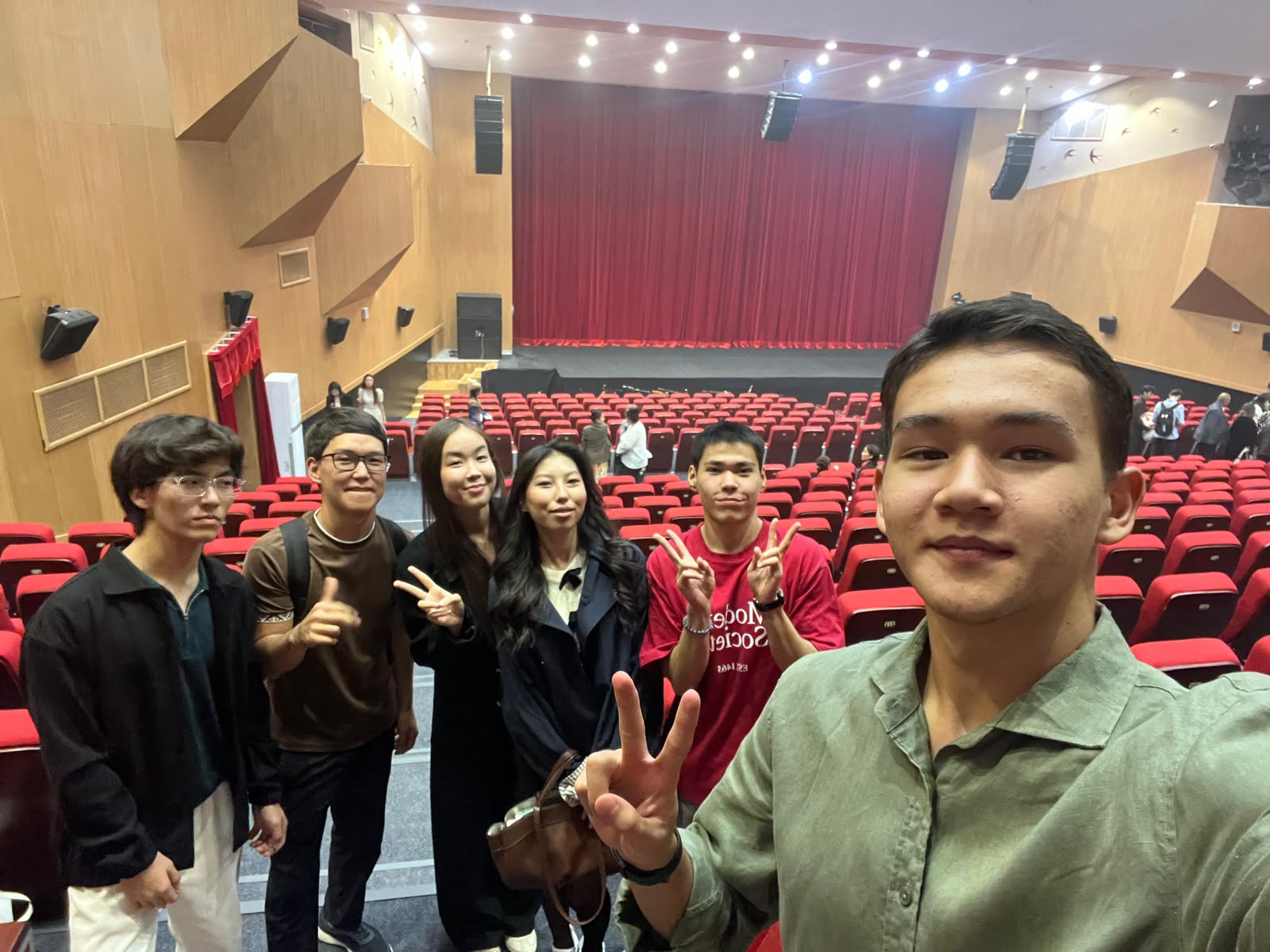
On September 24, 2026, first-year students of the Department of Chinese Studies at the Faculty of Oriental Studies of Al-Farabi Kazakh National University, accompanied by their curators Nurtalip Sharypkazy, Kulpinai Duisenbai, and Olzhas Turdan, visited the Alatau Traditional Arts Theatre, where they attended the sound drama “Mamluk — Sultan Baybars.”
The theatre visit was part of the department’s cultural and educational activities aimed at broadening students’ horizons, introducing them to Kazakhstan’s historical heritage, and fostering an interest in national culture.
The production is dedicated to Sultan Baybars, a prominent 13th-century ruler of Kipchak origin who became Sultan of Egypt and played a significant role in the history of the Middle East. One of the most important events of his reign was the Mamluk victory over the Mongol forces at the Battle of Ain Jalut in 1260.
The performance was created in the genre of sound drama — a theatrical form that places particular emphasis on sound, music, physical expression, movement, and stage action. The production was directed by Farhad Moldagali. Through artistic means, the performance portrays the fate of a man who found himself far from his homeland and rose from captivity to become one of the most renowned rulers of the medieval East. According to the director, the production incorporates elements of Kazakh culture, folklore, traditions, songs, and traditional musical instruments.
For students of Chinese Studies, learning about the history of Baybars is particularly significant. Future specialists in Oriental Studies study the history and culture of various regions of the East; therefore, an understanding of their own historical and cultural heritage is an important part of their professional education.
“For us, as specialists in Oriental Studies, knowing history and understanding the national spirit is a direct responsibility. Baybars came from the Kazakh land, and his name is known throughout the East. His resilience, love for his homeland, and greatness serve as an example for our younger generation,” said curator Nurtalip Sharypkazy.
According to the students, the performance left a deep impression on them. The audience noted the unusual theatrical form, in which folk melodies, traditional motifs, physical expression, and contemporary theatrical techniques were brought together into a unified artistic space.
“For me, ‘Mamluk’ is not simply a story; it is an opportunity to better understand myself and my origins. While studying the Chinese language and culture at the Faculty of Oriental Studies, we should first and foremost know the history and outstanding figures of our own people,” said a first-year student, sharing her impressions.
Kulpinai Duisenbai, who organized the theatre visit, emphasized the importance of such activities in the educational process:
“We do more than teach foreign languages in the classroom — we strive to educate spiritually enriched individuals who know, love, and value their culture. Introducing students to works of national art is an important part of this process.”
The Alatau Traditional Arts Theatre is engaged in preserving and promoting Kazakhstan’s national cultural heritage. The performance “Mamluk — Sultan Baybars” has also been presented on the international theatre stage, including at the A. P. Chekhov International Theatre Festival in Moscow.
For the first-year students, attending the performance was not only an opportunity to become acquainted with contemporary theatre but also an important lesson in history and culture. Such activities complement academic education with practical experiences of cultural exploration and contribute to developing a broad historical perspective among future specialists in Oriental Studies.
The Department of Chinese Studies plans to continue organizing cultural and educational activities that contribute to students’ comprehensive development, expand their knowledge of Kazakhstan’s history and culture, and foster professional interest in the civilizations of the East.
“Those who know the history of their people and value their culture are capable of understanding other civilizations more deeply,” noted curator Olzhas Turdan.
Other news