KazNU Associate Professor Develops Electrode Materials for Batteries in Poland
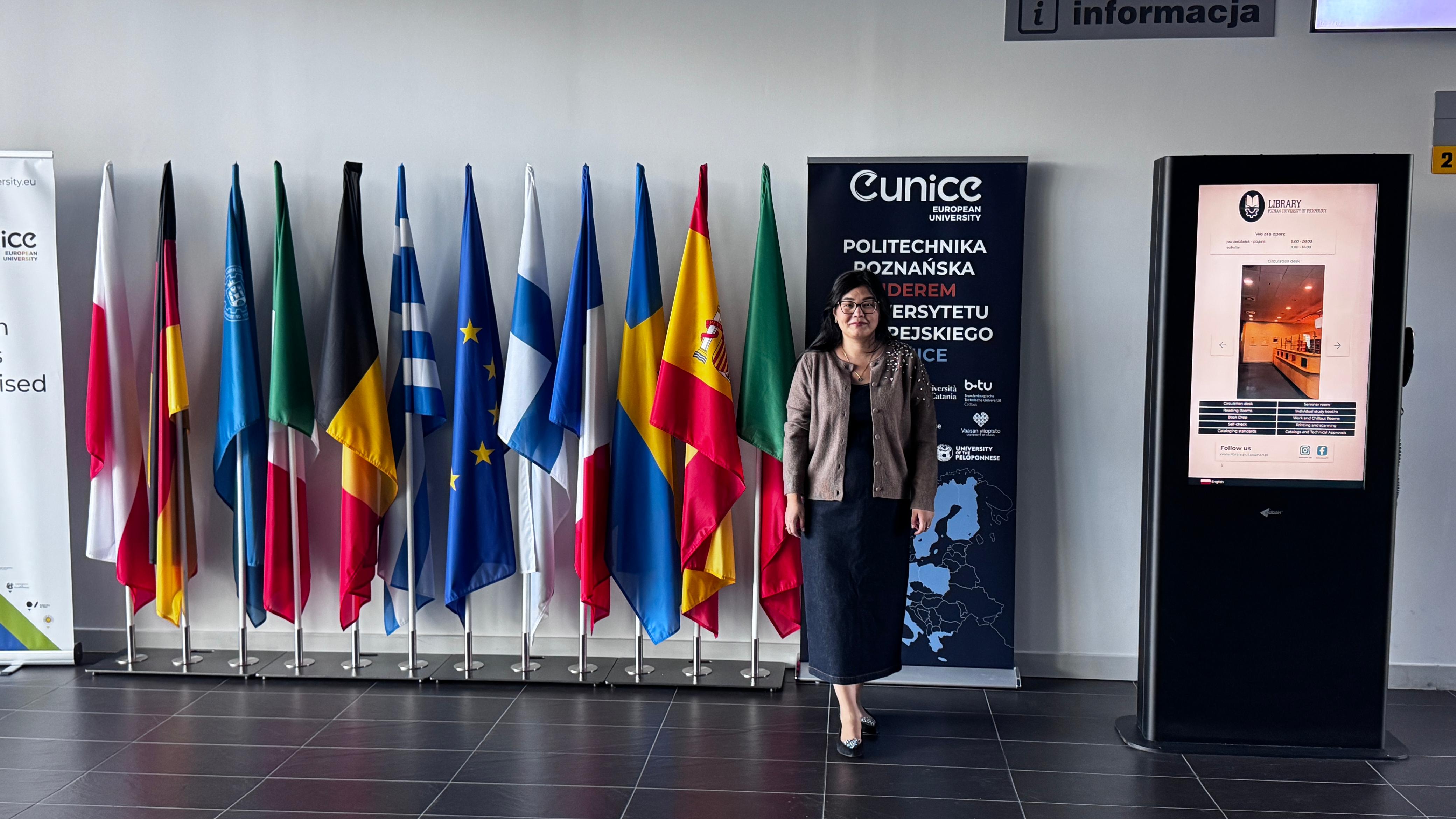
Zhazira Supiyeva, Associate Professor at the Department of Physical Chemistry, Catalysis and Petrochemistry, Faculty of Chemistry and Chemical Technology, Al-Farabi Kazakh National University (KazNU), is undertaking a research fellowship at Poznan University of Technology in Poland under the ULAM NAWA international scholarship programme. The programme received 324 applications from researchers representing 52 countries who sought the opportunity to conduct research in Poland. Following the competitive selection process, only 71 projects were awarded funding. Zhazira Supiyeva was among the 71 successful researchers and is conducting her fellowship at the Faculty of Chemical Technology under the supervision of Professor Qamar Abbas.
Her research project is entitled “Development of electrochemically reduced graphene oxide-based nanocomposites for battery electrodes”. The work focuses on the preparation and investigation of promising electrode materials for electrochemical energy storage systems. The study will investigate the properties of the nanocomposites and evaluate their electrochemical performance for future application in rechargeable batteries.
The fellowship facilitates the exchange of research expertise, the acquisition of modern research methods and the preparation of joint publications. In the longer term, its outcomes may enhance the international visibility of KazNU’s research and contribute to improvements in indicators considered in the QS rankings, including citations and international research links.
The significance of this research extends beyond academic outcomes: the development of materials for energy storage systems aligns with Sustainable Development Goal (SDG) 7, “Affordable and Clean Energy”, and SDG 9, “Industry, Innovation and Infrastructure”. The international collaboration underpinning the research also supports SDG 17, “Partnerships for the Goals”, by combining scientific exchange with efforts to address pressing technological challenges.
Professor G.Y. Yergaziyeva
Head of the Department of Physical Chemistry, Catalysis and Petrochemistry