Small Bins, Big Impact: KazNU Celebrates International E-Waste Da
Every day we rely on smartphones, laptops, smartwatches, and remote controls. But how often do we stop to think about where these devices and their batteries go when they finally stop working? Today at Al-Farabi Kazakh National University, that question turned into practical action. In celebration of International E-Waste Day, the university brought together students, faculty, and research scientists to demonstrate that environmental responsibility starts right here on campus through simple, conscious choices.
Special eco-bins, installed across the KazNU campus with the support of Samsung Electronics Kazakhstan, have quietly become the focal point of a growing campus-wide environmental movement. Today, our team successfully collected and sorted all the electronic waste accumulated across key university locations: the Rectorate, the Faculty of Information Technology, the Faculty of Geography and Environmental Sciences, and the Physics and Technical Faculty.
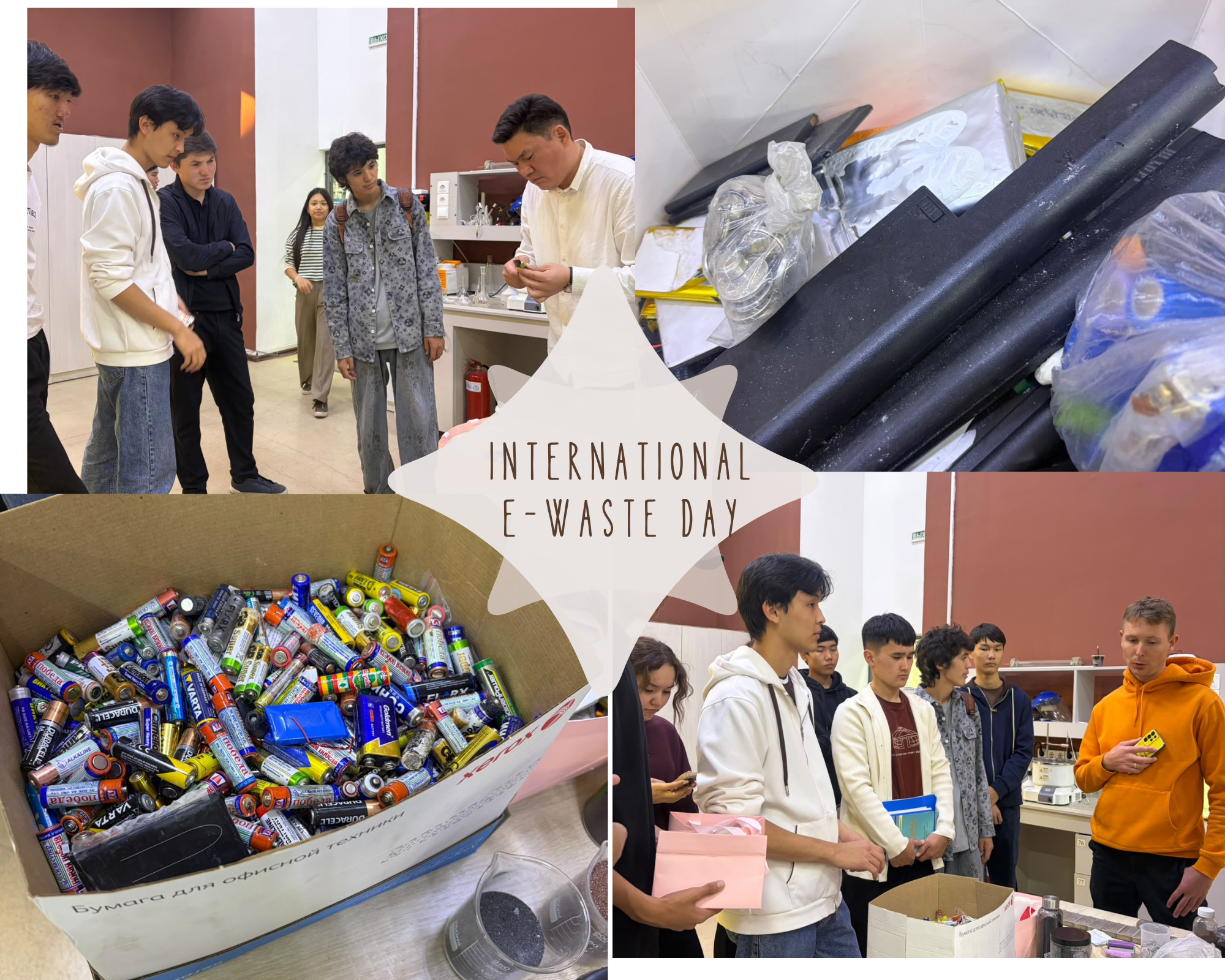
The highlight of the day was an interactive session with students at the Farabi Chem Science Cluster. Here, students discovered a crucial truth: used batteries are far from harmless. A single household battery carelessly thrown into regular trash can contaminate up to 20 square meters of soil and hundreds of liters of water with toxic heavy metals and acids. Nature cannot simply bounce back from this chemical load, which is why discarded batteries must never end up in regular landfills.
Guided by the brilliant research team led by Associate Professor and PhD Fedor Malchik, students explored safe battery sorting and recycling technologies. But true sustainability starts even earlier—with conscious consumer habits. Switching to rechargeable batteries that last for years is a powerful way to reduce waste at the source, while any dead batteries can be responsibly dropped into campus eco-bins. This scientific project represents a vital step toward localized green technologies and environmental safety.
This meaningful initiative aligns directly with several United Nations Sustainable Development Goals (SDGs):
SDG 4 (Quality Education): Engaging youth in practical ecological learning and fostering environmental awareness.
SDG 9 (Industry, Innovation and Infrastructure): Advancing scientific research and innovative technological solutions in waste management.
SDG 11 (Sustainable Cities and Communities): Building eco-friendly and responsible infrastructure within the university campus.
SDG 12 (Responsible Consumption and Production): Promoting conscious consumption, the shift to rechargeable power sources, and the culture of separate waste collection.
SDG 17 (Partnerships for the Goals): Creating a strong synergy between academic initiatives and scientific excellence at the Farabi Chem Science Cluster.
We extend our sincere gratitude to Samsung Electronics Kazakhstan for providing the campus infrastructure, and to the scientific laboratory team led by Fedor Malchik for sharing their expertise. Let's keep moving forward—by choosing reusable options, protecting nature, and recycling every single battery!