- Main
- News
- Good Health and Well-being: Seminar and Training Session "Infections and Prevention" Held in Support of SDG 3
Good Health and Well-being: Seminar and Training Session "Infections and Prevention" Held in Support of SDG 3
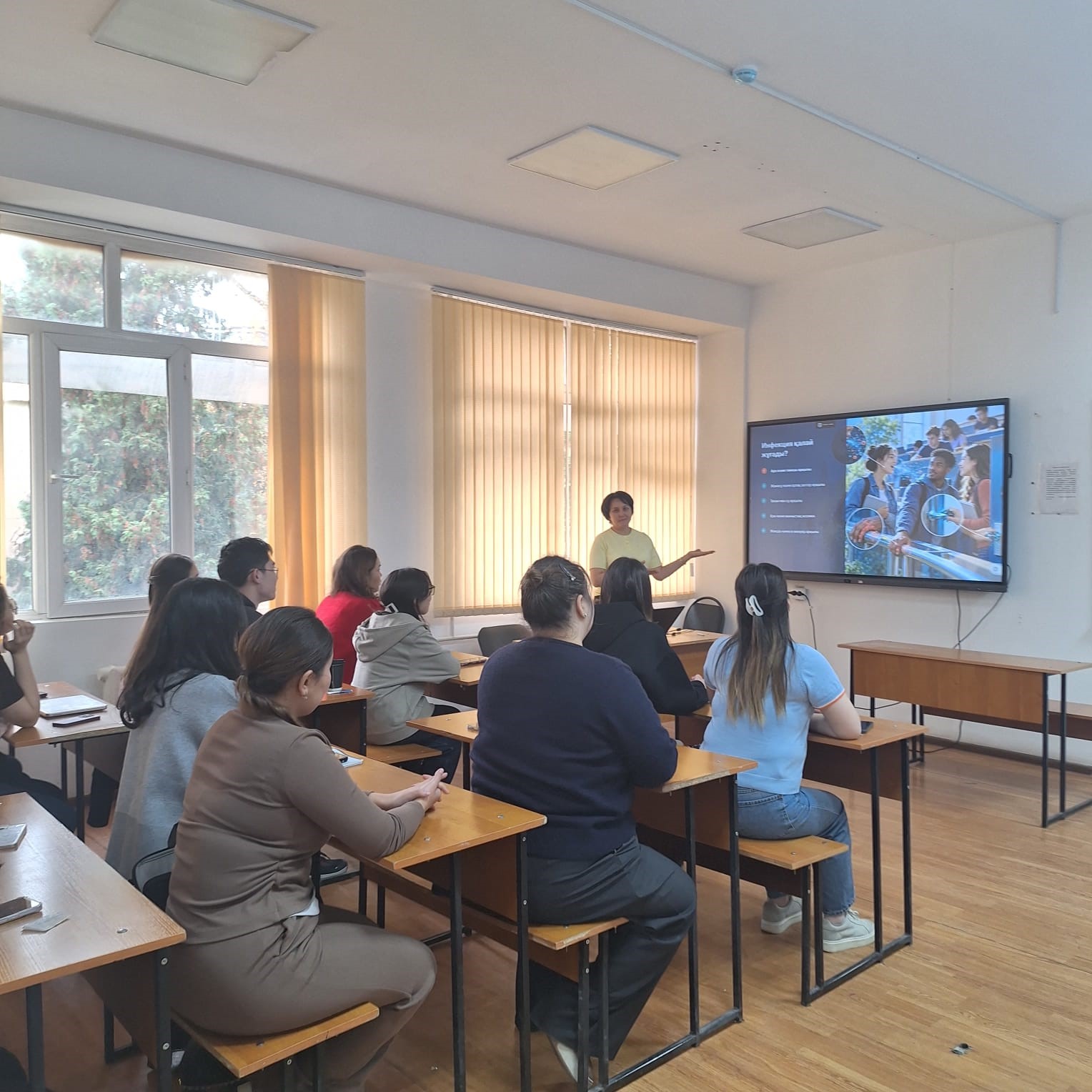
On October 30, 2026, under the guidance of Sh. M. Yrgynbayeva, curator-advisor of the Department of Molecular Biology and Genetics, and with the participation of senior curator A. D. Serbayeva, a seminar-training session entitled “Infections and Prevention” was held for second-year students enrolled in the 6B05105 Genetics educational program.
The main purpose of the event was to expand the participants’ knowledge of infectious diseases, their modes of transmission, and preventive measures, as well as to foster a responsible attitude towards personal and public health.
The event was directly linked to Sustainable Development Goal 3: “Ensure healthy lives and promote well-being for all at all ages.” In accordance with this goal, the seminar addressed the prevention of infectious diseases, the improvement of health literacy, the importance of vaccination, and the development of safe behaviour practices.
During the seminar, participants received comprehensive information about the causes of infectious diseases, the main pathogens, and the mechanisms of infection transmission. In particular, airborne, contact and household, foodborne, waterborne, and bloodborne transmission routes were explained. The students were introduced to methods of preventing influenza, acute respiratory viral infections, intestinal infections, viral hepatitis, and other infectious diseases.
The practical part of the training covered personal hygiene, proper handwashing techniques, regular ventilation of rooms, the selection of safe food products, and appropriate actions to take when symptoms of illness appear. The importance of a balanced diet, physical activity, sufficient sleep, and avoiding harmful habits in strengthening the immune system was also emphasized.
The event was organized in an interactive format. Students completed thematic tasks, discussed case-based questions, and proposed solutions aimed at reducing the risk of infection. During a dedicated question-and-answer session, the participants received detailed information on issues of particular interest to them. The training also included examples of risks encountered in everyday life and a joint analysis of ways to break the chain of infection transmission.
At the end of the seminar and training session, the participants noted that preventing infectious diseases is not only the responsibility of healthcare professionals but also the personal responsibility of every individual. Consistent adherence to simple preventive measures can help prevent the spread of many infectious diseases.
Such educational events help improve students’ health literacy and encourage them to apply the principles of a healthy lifestyle in their daily lives. The “Infections and Prevention” seminar and training session not only provided participants with useful information but also helped them understand the importance of taking responsibility for their own health and the safety of those around them.
Other news